PRIVATE CLIENT TAX · SYDNEY

Structure,
before tax.

One team for the whole picture — tax, structure and cross-border affairs for private business owners, investors and families across Australia and Greater China.

ARRANGE A PRIVATE CONSULTATION
Sandstone colonnades and dome of a heritage building at Bridge and Macquarie Streets, Sydney
Bridge Street at Macquarie Street, Sydney

THE WHOLE PICTURE

One file. Every entity, every border.

Most families we advise hold assets through several entities in more than one country. We map the whole structure first, then advise on it as one.

FAMILY
FoundersNext generation
STRUCTURE
Family trustsCompaniesSMSFOffshore holdings
ASSETS
Operating businessesPropertyPortfoliosPRC & HK interests

WHEN CLIENTS CALL US

The moments that decide the tax.

  1. 01Selling a business or a major asset
  2. 02Moving to, or leaving, Australia
  3. 03Bringing family wealth into Australia
  4. 04Passing control to the next generation
  5. 05Facing an ATO or Revenue NSW review
  6. 06Restructuring before the 2027 reform
  7. 07Holding assets through offshore trusts or companies
  8. 08Developing or holding property at scale

PRACTICE

Areas of practice

Advice and compliance under one roof, so the return you lodge matches the structure you planned.

01Family office & successionFamily group structures, trust deed reviews, generational transfer and estate coordination with your lawyers.
02Cross-border & residencyResidency and treaty tie-breakers, arriving and departing residents, CFC and foreign trust attribution, CRS, China offshore-trust rules.
03Private groups & business taxCompany, trust and partnership returns; consolidation; Div 7A and UPEs; year-end trust distributions with s100A in view.
04Property & developmentHolding structures, NSW land tax and foreign-person surcharges, exemptions, GST and the margin scheme, CGT on sale.
05Transactions & restructuresAcquisitions, shareholder buy-outs and settlements, entity wind-ups and deregistrations, pre-sale restructures.
06ATO reviews & disputesPrivate group reviews, streamlined assurance under the Next 5,000 program, objections and voluntary disclosures.

OUR VIEW

“Tax, investment and finance are one closed loop. Tax shapes how you hold and how you leave. Investment is the engine. Finance, used with restraint, lifts the return.”

The right question today. A different tomorrow.

SELECTED MATTERS

Recent work

A selection of recent engagements. Client details are withheld.

SUCCESSION

Succession for a family business in China

With Australian and PRC counsel, compared a PRC testamentary trust, an offshore family trust and an Australian unit trust for a family’s controlling interest in a PRC operating company — on control, succession, asset protection and tax in both countries.

CAPITAL GAINS

Sale of a pre-arrival offshore shareholding

Reconstructed residency history, the departure-date deemed disposal and market-value cost base for a large offshore share sale — the difference between a capital loss and a multi-million-dollar liability.

FAMILY TRUSTS

China’s 2026 offshore-trust rules

Assessed the exposure of Australian family trusts with PRC-resident beneficiaries under China’s new offshore-trust IIT regime.

TAX REFORM 2027

The rules change on 1 July 2027.

The largest change to how Australia taxes capital, property and trusts in a generation. Most structures will need a fresh look before the start date, not after it.

1 JULY 2027

CGT discount replaced

Law since June 2026. The 50% discount gives way to cost-base indexation, with a 30% minimum tax on net capital gains. Gains accrued to 30 June 2027 keep the discount; later gains do not.

1 JULY 2027

Negative gearing narrowed

Law since June 2026. From 1 July 2027, established homes bought after 7:30pm on 12 May 2026 can no longer be negatively geared; new builds, and homes held before that time, are not affected.

1 JULY 2028

30% minimum tax on discretionary trusts

Bills for a minimum tax on discretionary trust income have been before Parliament since October 2026. Rollover relief for restructuring runs from 1 July 2027 to 30 June 2030.

REQUEST A REFORM IMPACT REVIEW

PEOPLE

The people on your file

Prepared by one hand, reviewed by another, signed off by a director.

Winson Li

DIRECTOR

Signs off the firm’s advice and returns for its larger private groups, and brings a financial-reporting background from listed companies and multinational groups to engagements where a family’s structure runs across companies, trusts and more than one country.

FOCUS
  • Annual financial reports for ASX-listed companies
  • General purpose financial statements for multinational groups and their Australian subsidiaries
  • Private groups with company, trust and SMSF structures
  • Year-end planning and trust distributions
  • Property development and investment entities, including financier reporting

English · Mandarin · Cantonese · Bachelor of Accounting, University of Sydney · Chartered Accountant · In practice since 2011 · ASX-listed company and multinational group reporting

Aurora Lui

TAX SPECIALIST

Tax lawyer and Chartered Tax Adviser. Looks at tax across the whole life of a transaction — income tax, GST and stamp duty — and manages reviews and audits with the ATO and state revenue offices.

FOCUS
  • Mergers and acquisitions, corporate restructures and cross-border financing
  • Property development, construction and debt funds
  • Family offices and high-net-worth individuals, including China-linked groups
  • ATO and state revenue reviews, audits and disputes

English · Mandarin · LLB, BCom (Econ), LLM — University of Sydney · Chartered Tax Adviser, The Tax Institute

SUPPORTED BY

Brian Ye

CLIENT MANAGER

The day-to-day contact for private clients and their families. Brian reviews every return and working paper before it reaches a director, keeps each engagement on its timetable, and makes sure no ATO letter sits unanswered.

  • Financial statements and tax returns for individuals and SMEs
  • Review of working papers before sign-off
  • ATO correspondence and lodgement timetables

English · Mandarin

Sisi Chen

MANAGER

Sisi works alongside Winson on the firm’s larger family groups, keeping the accounts of their trusts, companies and SMSFs consistent from one year to the next and preparing the year-end position that the directors sign off.

  • Financial statements and tax returns for individuals and SMEs
  • Family groups with multiple entities
  • Trust and company accounts and returns
  • SMSF accounts and compliance

English · Mandarin · Cantonese

Elsa Yang

MANAGER

Elsa runs the annual cycle for business clients, from quarterly BAS and industry-specific indirect taxes through payroll obligations to the year-end accounts, so that nothing reaches 30 June unreconciled.

  • Financial statements and tax returns for individuals and SMEs
  • BAS, GST and industry-specific indirect taxes
  • Payroll, STP and super obligations
  • Year-end accounts for operating businesses

English · Mandarin

ENGAGEMENT

How we engage

Advice first, then the paperwork.

  1. i.First meetingA confidential meeting with a director to understand the group, the people and the question.
  2. ii.Scope & proposalA written scope and fee proposal, entity by entity, before any work begins.
  3. iii.EngagementA formal engagement letter, then work prepared by one hand and reviewed by another, with a director signing off.
  4. iv.Annual reviewA planning meeting before 30 June each year, and a review of every structure as the law and the family change.
DISCRETION

Your affairs are discussed with you, and with no one else.

Every matter is confidential by default, bound by the Tax Agent Services Act code of conduct. Mutual confidentiality agreements on request; files open only to the team on your file.

PERSPECTIVES

Perspectives

FAMILY GROUPSFamily trusts after 2028: three paths, one deadlineREAD →

The Bills for a 30% minimum tax on discretionary trusts went before Parliament in October 2026 and are not yet law. As drafted, the trustee would pay at least 30% on the trust’s taxable income for income years starting on or after 1 July 2028, with a non-refundable offset for individual beneficiaries. A distribution to a bucket company would no longer bring the rate down.

Each family trust now faces three broad paths: accept the minimum tax; elect into the excluded election trust regime and give up much of its distribution flexibility; or restructure into a company or fixed trust under rollover relief available from 1 July 2027 to 30 June 2030, subject to a four-year clawback.

The draft also ties eligibility to who could benefit under the deed on 1 July 2028, so many deeds — testamentary trusts included — will need review well before then. We model each path against the family’s income, assets and succession plans, and set out which decisions have to be made, and by when.

CROSS-BORDERCRS: what your banks already tell the tax officeREAD →

Under the Common Reporting Standard, banks, brokers, insurers and many investment entities identify which of their customers are tax resident elsewhere and report their balances, interest, dividends and sale proceeds each year. Australia has collected this information since 1 July 2017 and exchanges it with more than 100 jurisdictions, including mainland China, Hong Kong and Singapore.

It works in both directions. An Australian resident’s accounts in Shanghai or Hong Kong reach the ATO; a mainland resident’s accounts in Sydney reach the Chinese tax authorities. Residency for CRS is a tax test, not a visa test, and a person resident in two places may be reported to both. For trusts and holding companies, the report looks through to the people who control or benefit from them.

Most problems we see come from self-certifications that no longer match the facts — a residency that has changed, a trust classified the wrong way, an old address. We review a family’s accounts, entities and declarations together, correct what needs correcting, and make sure the income the data will show is the income that was declared.

CROSS-BORDERChina’s 2026 offshore-trust rules and Australian family structuresREAD →

China’s Caishui [2026] No. 21, effective 24 July 2026, sets out for the first time how individual income tax applies to offshore trusts. Ordinary Australian family and discretionary trusts fall within its scope.

Where a PRC tax resident settled or benefits from the trust, its income can be taxed in China at 20% each year, in some cases before any distribution. Holding a foreign passport or permanent residency does not settle the question if a person’s main economic interests remain in China.

Australian tax paid can be credited, but the bases differ: China does not recognise the CGT discount or allow trust expenses, and the tax years do not align. The gap should be modelled before each Chinese filing season.

RESIDENCYLeaving Australia: your property, shares and family trustREAD →

Ceasing Australian tax residency is a tax event. Assets that are not taxable Australian property — typically shares and offshore investments — are treated as sold at market value on the day you leave, unless you choose to defer.

Australian real property stays in the Australian tax net. Foreign residents lose the main residence exemption, with limited exceptions, and the CGT discount for non-resident periods; buyers must withhold 15% of the price from a foreign-resident seller.

Family trusts need attention too: distributions to a non-resident beneficiary are taxed at the trustee level, and where the people controlling the trust live matters. The leaving date, and what is done before it, should be planned.

PRIVATE BRIEFING

A quarterly note on what changed, and what it means.

Four times a year. No marketing.

ENQUIRIES

A private
conversation, first.

Sent in confidence to our office. A director will reply to arrange a time.
BUSINESS ADDRESSDomain House, Suite 4.03, Level 4139 Macquarie StreetSydney NSW 2000
POSTAL ADDRESSPO Box R993Royal Exchange NSW 1225
OUR ADDRESS

Why Domain House.

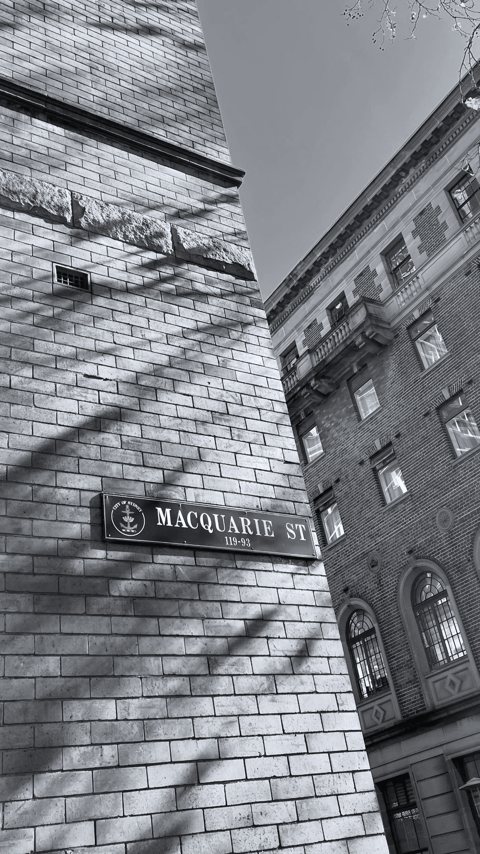
Macquarie Street sign on a brick wall
Macquarie Street
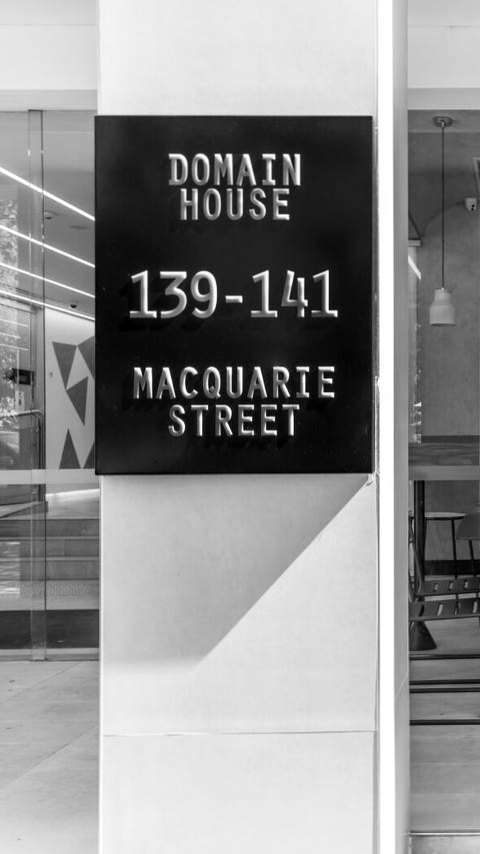
Domain House, 139–141 Macquarie Street, Sydney
Domain House
MACQUARIE STREET

Macquarie Street was laid out under Governor Lachlan Macquarie in the 1810s as the civic spine of the colony. Parliament House, Sydney Hospital, the Mint, Hyde Park Barracks and the State Library stand along it, and the Phillip Street bar, the courts and the banks of Martin Place are a few minutes’ walk away. For the centre of a city, it is unhurried — sandstone, old figs, and the harbour at the end of it.

DOMAIN HOUSE

Domain House is the opposite of a tower: a small, quiet building looking across to the Domain — land Governor Phillip reserved in 1788, part of which became the Royal Botanic Garden in 1816. Each morning the sun rises over the water with nothing in its way, and the first hour of the day belongs to thinking rather than to the inbox.

WHY IT MATTERS

That matters more in tax than it might seem. The rules are written in general terms; a family’s affairs never are. The useful answer usually comes from stepping back — seeing how a trust deed, a residency question and a sale three years away fit together — and that takes quiet, independent time. The view brings something new to the work most mornings, and clients who meet us here tend to feel it too.

FOR CLIENTS

Meetings here are private by design. There is no shopfront and no busy reception floor — clients come up to a quiet suite, sit with a director, and leave without passing anyone they know. Parking is a few doors away at Hudson House, Martin Place and Circular Quay stations are a short walk, and the Opera House car park is at the end of the street. Many clients combine a meeting with lunch nearby or a walk through the Garden; it is, we think, the right setting for a conversation about family, wealth and what comes next.


THE ADDRESS

Meetings by appointment at Domain House, between Martin Place, the Royal Botanic Garden and Circular Quay.

PARKING

Wilson Parking, Hudson House Car Park — 131 Macquarie Street, a few doors from us. Or Sydney Opera House Car Park, entry at 2A Macquarie Street; prepay online for the best rate.

Find us on Google →